Monday, February 7, 2011

Being Poor in Egypt


This photo of a girl, standing in a field of corn, was taken by me as I sailed down the Nile on a tour boat in the summer of 1976. I can still smell and taste the wonderful corn on the cob, grilled in the husk, that was a common street food in Cairo. The British turned the Delta in a region for cash-crop long-staple cotton production. As Egypt's population boomed, the country was forced to import cereal grains. Food riots in the 70's followed the government's requirements to toe the line of the IMF and decrease the subsidy on bread. In the 80s, I recall reading an article in which Egyptians expressed their dissatisfaction with a government proposal to add corn flour to the mix for making daily bread. Which brings me to the topic of the post preceding this one, about my astonishment to discover a box of Corn Flakes, made in Egypt, in one of those "Dollar Stores" that proliferate throughout the U.S. Many years ago, a Russian-American sociologist, Ptirim Sorokin, opined that World War I was all about "boire et manger." I think he was on to something! Please check out my other posts about food, whether on shelves in Indo-Pak groceries, or Israeli and Arab products
"coexisting" on the shelves of local ethnic markets. If we all ate together, and limited Americanization to Corn Flakes, we would all get along much better, I am sure of it! But no corn to export out of Egypt, please!

Friday, February 4, 2011

The Egyptian Corn Flakes


UPDATED 2-4-11: WHAT GREATER EVIDENCE IS NEEDED OF EGYPT'S MIND-BOGGLING POVERTY AND DESPERATION? WHAT KIND OF GOVERNMENT EXPORTS FOOD IN A COUNTRY WHERE NEARLY HALF THE PEOPLE LIVE ON THE EQUIVALENT OF TWO DOLLARS A DAY? WHO PROFITED FROM THIS? In 2009, for this blog, and as promised, I searched my vast archives of global flotsam and jetsam for this strange artifact of New World Corn in an Old World context making its way back to the New World in a most unusual transformation, which lends itself to discussion from any number of angles. But I am too tired to do that, so all I will say is: I believe that Egypt's average per capita income is about $700 annually. So why corn grown there ends up in a low-rent "Global Foods" box that is actually shipped back to the U.S. and sold in those (usually) Chinese-owned "Dollar Stores" boggles my mind. Which is plenty boggled as it is.

Tuesday, January 18, 2011

Luciano Pavarotti, Shammi Kapoor, Emmaneul Chabrier and Me: Part 2


It was the summer of 2001, and I was enjoying six weeks in the company of other teachers on a study-tour of China. It didn't take long for me to notice a series of peculiar events. Wherever we went, there were always more Chinese tourists than non-Chinese, and time and again I was either stared at or asked to pose with an individual or with an entire family for a picture. At first, I thought, well, they are not used to seeing foreigners, so they want their picture taken with one. After all, I have a beard, in addition to being a bit overweight. But this could not have been the case when, on Beijing's most upscale shopping street, I was snapped by several upscale Chinese, while on my way to the main branch of the Chinese Foreign Language Bookstore. It just kept happening. I won't exaggerate, but it happened at least twenty times. OK, on one of my final days in China, while walking along the marvelous Bund in Shanghai, a companion told me that "The Three Tenors" performance in The Forbidden City, which had occured not long before, was playing virtually non-stop on Chinese CCTV throughout the country that entire summer. That program, along with movies portraying Mao at Yenan, The Long March, and the 80th anniversary of the Chinese Communist Party. So it finally hit me. The people who wanted their pictures taken with me thought that I was/am Luciano Pavarotti. I DID once "go as" Luciano Pavarotti to a Halloween party, years ago. I suppose that it would not have occurred to many of them that the great tenor had left the country, nor that he would not just be walking around the tourist spots of China like any regular person. It amuses me now to think that in at least a few Chinese homes, there are framed portraits of family members atop lace doilies, with their arms around me, smiling and making the "V" for victory sign, along with Luciano Pavarotti. Nessun dorma, indeed!

Sunday, January 9, 2011

Luciano Pavarotti, Shammi Kapoor, Emmaneul Chabrier and Me: Part 1


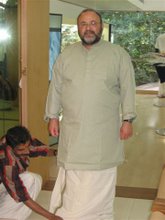
Well, I always thought that I had a previous life, and often wondered why I didn't continue piano lessons when I was younger. I really loved playing, and my teachers suggested that I had some talent. I now understand that it was the ghost of the French composer, Emmanuel Chabrier, laying his hand upon me because "I" had already contributed mightily to the world of great music. This present realization has its roots in India, land of mysteries, where one is routinely advised to "expect the unexpected". In 2006, many people there told me that I resembled Bollywood star Shammi Kapoor, not in his younger years as an older man. A simple image search will show how we look somewhat alike. I am sad to learn that this member of the "Barrymores of Bollywood" clan is in failing health, and can only wish him my best, unknown and from afar. In fact, my "other world" doppleganger is not Shammi Kapoor at all, whose seva I much admire. Rather, it is none other than Emmanuel Chabrier, the composer of "Spanish Rhapsody", the video/audio and likeness of myself may be enjoyed through a simple web searching. I include a photo of myself for purposes of comparison. Well, my search is now over. Enjoy the composition of my decomposition which, alas, I cannot replicate in this present incarnation. As for Luciano, more to come in my next post.

Monday, April 19, 2010

When China Awakens,The World Will Tremble

Couldn't help but recall this quote, attributed to Napoleon, while recently viewing portions of the 1937 film version of Pearl Buck's The Good Earth. While there is both much justifiable praise and criticism of this work, I was struck by the following text appearing at the beginning of the film, which of course is speaking to the imminent role of China as an ally in the struggle against Japan:

THE SOUL OF A GREAT NATION
IS EXPRESSED IN THE LIFE OF
ITS HUMBLEST PEOPLE. IN THIS
SIMPLE STORY OF A CHINESE FARMER
MAY BE FOUND SOMETHING OF THE
SOUL OF CHINA. ITS HUMILITY, ITS
COURAGE, ITS DEEP HERITAGE FROM
THE PAST AND ITS VAST PROMISE
FOR THE FUTURE.

At the time, of course, neither Chinese Nationalists nor Communists could imagine the "vast promise for the future" that China would eventually take post-1979, and its enormous force in the current global economy. It also occurred to me that the film "Mother India", twenty years later, borrowed heavily from visual representations of suffering peasantry as portrayed in The Good Earth. Well, as for China's future, imagined circa 1937, or even as peasants starved there in the late 50's, "who'da thunk it"?

当中国觉醒时,世界都发颤

我想起这句话,据说拿破仑波拿巴说了,而最近观看由美国作家赛珍珠的赛珍珠1937年电影版的部分。这两种批评和赞美的书和电影是合理的。下面的文字出现在电影的开始。它指的是将发挥作用,中国作为一个在抗日斗争中的盟友:
一个伟大民族的灵魂体现在了其最卑微的人的生活。在这一波我国农民简单的故事可能会发现作者对中国灵魂东西。智能谦逊,勇气,它从过去和对未来的广阔前景深厚资源。
当时既没有中国国民党,也不共产党人可以想像未来“是中国将最终实现”广阔的前景,在当前全球经济中的地位。电影“印度母亲”,20年后,借用农民如何在苦难的大地描绘严重。 1937年,谁能够想到什么中国和美国今天这样呢?

Saturday, November 28, 2009

ONE BY ONE -- AUNT ROSA OF SHABO~AKKERMAN

(PHOTOS: Rosa as a young woman, Rosa in the Red Army during the war, my mother, born in USA 1917)

Having spoken at length of his memories of growing to adulthood in the former Soviet Union, a great-uncle of mine on my mother's side informed me in the 1980s that many relatives were among "the lost" and killed, one way or another, in Europe during World War II. Some were shot into pits by Einsatzgruppen and fascist collaborators, some lost their lives in "German bombings" or in the Odessa catacombs to which they fled as Nazi air support aided Rumanian and Ukrainian collaborators in wiping out the Jewish presence of southern Bessarabia. He and his brother, my mother's father, were among the few who emigrated either just before or after the Russian Revolution. My mother's Aunt Rosa (whom she had never met) was a nurse in the Red Army Medical Corps and died under unknown circumstances as it made its way through Hungary in March/April 1945. One of my mother's sisters had photographs of Rosa and her siblings, copies of which came into my possession.  Included were pictures of Rosa, one of her as a young woman, another of her in Red Army uniform. Her resemblance to my mother astonished me. I only recently discovered that testimony of Rosa's death was submitted to Yad Vashem by someone whom my great-uncle had mentioned was a relative. I post this in memory of one of the many killed during World War II, without a grave to memorialize her.

לאחר דיבר באריכות על זיכרונותיו של גידול לבגרות של ברית המועצות לשעבר, דוד רבא שלי מצד אמא שלי הודיע ​​לי בשנת 1980, כי קרובי משפחה רבים היו בין "אבודים" ונהרג, בדרך זו או אחרת, אירופה בזמן מלחמת העולם השנייה. כמה נורו לתוך בורות ידי האיינזצגרופן ומשתפי הפעולה פשיסטיות, חלקם איבדו את חייהם "ההפצצות הגרמניות" או את הקטקומבות אודסה שאליו הם ברחו כמו סיוע אווירי הנאצי סייעה הרומני ומשתפי הפעולה האוקראינים לחסל את הנוכחות היהודית בסרביה בדרום. הוא ואחיו, אביו של אמי, היו בין הבודדים שהיגרו או לפני או אחרי המהפכה הרוסית. דודה של אמא שלי רוזה (שאותו מעולם לא פגש) היתה אחות בצבא האדום חיל הרפואה ומת בנסיבות לא ידועות כפי שהוא עשה את דרכו דרך הונגריה מרץ / אפריל 1945. אחת האחיות של אמא שלי היו תמונות של רוזה, אחיה ואחיותיה, עותקים של אשר בא לידי שלי. כלל היו תמונות של רוזה, אחת כאישה צעירה, עוד אחד שלה במדי הצבא האדום. דמיונה אמי הדהימה אותי. גיליתי רק לאחרונה, כי עדותו של מותה של רוזה הוגשה ליד ושם על ידי מישהו מהם דודי הזכיר היה קרוב משפחה. אני שולח את זה לזכרו של אחד מני רבים נהרגו במהלך מלחמת העולם השנייה, ללא קבר להנציח אותה.


Сказав при длине его воспоминания о растущей во взрослую жизнь в бывшем Советском Союзе, двоюродный дед мой по материнской линии сообщил мне в 1980-х годов, что многие родственники были среди «потерянных» и убили, так или иначе, в Европе во время Второй мировой войны. Некоторые из них были расстреляны в ямы на СД и фашистских коллаборационистов, некоторые потеряли свои жизни в «немецкой бомбардировки" или в одесские катакомбы, к которой они бежали, как нацистский поддержку с воздуха помогали румынских и украинских коллаборационистов в ликвидации еврейского присутствия в южной Бессарабии. Он и его брат, отец моей матери, были среди тех немногих, кто эмигрировал непосредственно перед или после русской революции. Тетя моей мамы Розы (которого она никогда не встречал) была сестрой милосердия в Красной Армии медицинский корпус и умер при невыясненных обстоятельствах, как это сделал свой путь через Венгрию в марте / апреле 1945 года. Одна из сестер моей матери были фотографии Роза и ее братья и сестры, копии вступившего в моем распоряжении. Среди них были фотографии Роза, одна из ее как молодая женщина, другой ее в форме Красной Армии. Ее сходство с мамой, меня поразило. Я только недавно узнал, что свидетельство о смерти Розы был представлен на Яд ва-Шем, кого мой двоюродный дядя упомянул о том, родственник. Я этот пост в память об одном из многих погибших во время Второй мировой войны, без серьезной, чтобы увековечить ее.

Friday, August 21, 2009

SWIMMING in the Rain, a.k.a, A Haircut in Calcutta and What It Feels Like to Be "High-Class"

As I sit at home waiting for it to rain after several days of almost monsoon-like heat and humidity, and following my last post about ice-skating on the Eiffel Tower, I am reminded of a two-part tale that may, upon reflection, be quite trivial but also somewhat instructive. Anyway it is the summer of '06. As an American teacher, I was privileged (thank you, fellow taxpayers and Uncle Sam), along with 14 peers drawn from across the U.S. to spend 6 weeks in India. Our last week was spent partly in Kolkata (Calcutta), by which time my beard was out of control (but alas, not so much the hair on my head). I had heard it said while in China '01 that India Fulbright awardees are put up mainly in five-star hotels (true, and in one case, even a six-star!), which just knock the socks out of we middle-class Americans who think it perfectly fine to stay at a budget local hotel or motel chain, thank you very much. We awardees were also given, to my complete surprise, an extremely generous stipend for books and whatever. I suspect that one colleague gave most of it away to the needy, randomly, in appropriate acts of selflessness. Think "Slumdog". Part I: In any case, by the time we were in Calcutta I needed a beard trim and haircut badly, but was informed by reception that the ladies who work in the "saloon" were incapable of dealing with a man's beard (yes, saloon, not the American-French pronounced "salon", and it is not incorrect) . "We will find you a proper shop and arrange for a taxicab" (of course, I wasn't expected to just go find some "untouchable" dalit somewhere and sit on the curb while he gave me a haircut, was I?) OK. Well, I was given the address, the cab ride was not far at all, but the shop (which I would in fact not have found on my own) was about a block away from the mildly intimidating sandbags, Indian sharpshooter units, watchtower, high security walls, and anti-bomb structures of various kinds designed to protect both the British and America consulates, both located, as it turns out, on the pedestrian-only Ho Chi Minh St. Ah, leave it to Bengalis to make "Gogol" a "Namesake" (even if only in fiction) and, deliberately or not, to require American government officials to be daily reminded of Ho Chi Minh. Is there an "Adolf Hitler Street" in Ahmdavad? Not yet, I don't think. But I digress. The point is, vehicle traffic was not allowed so that I could be taken directly to the barbershop, and the taxi driver offered, after parking the cab in a no-parking zone (of course, and why not? it is a legitimate form of resistance to the powers that be), to walk me to the shop and wait for nearly an hour back in the cab until I was done. When I walked into the shop and noticed about a dozen people crowded into a small space, I assumed I would have to wait my turn, but no, they were mostly employees. For me, there was: one person to cut the meager hair on my head, another to cut my beard, another to trim my eyebrows and nose hairs, and a fourth to provide a head massage. I paid for everything and tipped everyone generously, walked back to the cab waiting for the explosion that happily did not occur, and was driven back to the hotel. The cost for this entire "operation" was less than what I spend for a haircut and beard trim at home! When I gave the cab driver the amount shown on the meter plus a tip (a total of about $5), the look of joy on his face was one that I will never forget. I suspected that his family would eat better than usual that evening, and returned to my hotel room. Part II: Well, if you're a male like me you may also know how irritating it is to have all the scratchy little hairs left on your neck and back after a haircut: no matter how few or microscopic, I feel them! I have been swimming almost daily since 1982, and after a quick shower, I headed straight to the courtyard pool of our exclusive hotel. It was about 5 or 6 pm. and I was the only guest present in the area. I am reclining comfortably in the second chair from the left, in the photo, and after a decent interval following my poolside sandwich, Kingfisher beer, and Cuban cigar, it was time to swim my 30 laps. Or, I should say, swim my laps as well I could in a kidney-shaped pool. After about lap 10 or so, the skies opened. It is the monsoon. Torrential rain, thunder, and lightning --- the kind I would like right now to break the heat and allow Mother Nature, rather than myself, to water the lawn and shrubbery. Now, where I come from, they close even indoor pools when that happens, in strict observance of Red Cross rules. A hotel staff person came rushing out, thick and fluffy Turkish towel, bathrobe, and umbrella-ready, to escort me out. "Sir, sir, don't you wish to leave the pool?" Well, I'm thinking (yes, maybe I am crazy): "Wow, this is the greatest swim I have ever had, in torrential rain." The last thing I want is to get out of the pool! As it turned out, it wasn't a question of hotel policy or safety rules, it was simply assumed that I would want to leave. Well, I didn't. And I like to think that to this day, perhaps partly because I actually conversed with this guy about his life and also gave him a good tip, the man whose job it was to "serve" me remembers the crazy American who wanted to swim in the rain. So what are the lessons here? It was very awkward being treated with such deference by a serving class, as I am not a Prime Minister, Indian VVIP (yes, that's two "V's", as in Shahrukh Khan at Newark Airport last week), jet-setter, or descendant of British artistocracy. God forbid you should walk out of the hotel elevator rolling your own suitcase. In New Delhi, we didn't even have to tell the elevator operator what floor we wanted. It was his job to know, so that we had to do as little as possible. But you can pee on your own in the toilet. Didn't Gandhiji try to put an end to all this? Yes, but he didn't get the India he wanted. And neither did most Indians. And indeed, there is the Hindu custom of treating the guest "like God" which is a lot different from the new China's resurrection of Confucius' "how wonderful it is to have guests from afar." I, on the other hand, flew back from India to my little piece of the American dream, toting these and many other memories of teacherly "compare and contrast" that will stay with me always.