Sunday, January 9, 2011

Luciano Pavarotti, Shammi Kapoor, Emmaneul Chabrier and Me: Part 1


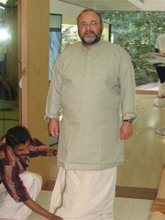
Well, I always thought that I had a previous life, and often wondered why I didn't continue piano lessons when I was younger. I really loved playing, and my teachers suggested that I had some talent. I now understand that it was the ghost of the French composer, Emmanuel Chabrier, laying his hand upon me because "I" had already contributed mightily to the world of great music. This present realization has its roots in India, land of mysteries, where one is routinely advised to "expect the unexpected". In 2006, many people there told me that I resembled Bollywood star Shammi Kapoor, not in his younger years as an older man. A simple image search will show how we look somewhat alike. I am sad to learn that this member of the "Barrymores of Bollywood" clan is in failing health, and can only wish him my best, unknown and from afar. In fact, my "other world" doppleganger is not Shammi Kapoor at all, whose seva I much admire. Rather, it is none other than Emmanuel Chabrier, the composer of "Spanish Rhapsody", the video/audio and likeness of myself may be enjoyed through a simple web searching. I include a photo of myself for purposes of comparison. Well, my search is now over. Enjoy the composition of my decomposition which, alas, I cannot replicate in this present incarnation. As for Luciano, more to come in my next post.

Monday, April 19, 2010

When China Awakens,The World Will Tremble

Couldn't help but recall this quote, attributed to Napoleon, while recently viewing portions of the 1937 film version of Pearl Buck's The Good Earth. While there is both much justifiable praise and criticism of this work, I was struck by the following text appearing at the beginning of the film, which of course is speaking to the imminent role of China as an ally in the struggle against Japan:

THE SOUL OF A GREAT NATION
IS EXPRESSED IN THE LIFE OF
ITS HUMBLEST PEOPLE. IN THIS
SIMPLE STORY OF A CHINESE FARMER
MAY BE FOUND SOMETHING OF THE
SOUL OF CHINA. ITS HUMILITY, ITS
COURAGE, ITS DEEP HERITAGE FROM
THE PAST AND ITS VAST PROMISE
FOR THE FUTURE.

At the time, of course, neither Chinese Nationalists nor Communists could imagine the "vast promise for the future" that China would eventually take post-1979, and its enormous force in the current global economy. It also occurred to me that the film "Mother India", twenty years later, borrowed heavily from visual representations of suffering peasantry as portrayed in The Good Earth. Well, as for China's future, imagined circa 1937, or even as peasants starved there in the late 50's, "who'da thunk it"?

当中国觉醒时,世界都发颤

我想起这句话,据说拿破仑波拿巴说了,而最近观看由美国作家赛珍珠的赛珍珠1937年电影版的部分。这两种批评和赞美的书和电影是合理的。下面的文字出现在电影的开始。它指的是将发挥作用,中国作为一个在抗日斗争中的盟友:
一个伟大民族的灵魂体现在了其最卑微的人的生活。在这一波我国农民简单的故事可能会发现作者对中国灵魂东西。智能谦逊,勇气,它从过去和对未来的广阔前景深厚资源。
当时既没有中国国民党,也不共产党人可以想像未来“是中国将最终实现”广阔的前景,在当前全球经济中的地位。电影“印度母亲”,20年后,借用农民如何在苦难的大地描绘严重。 1937年,谁能够想到什么中国和美国今天这样呢?

Saturday, November 28, 2009

ONE BY ONE -- AUNT ROSA OF SHABO~AKKERMAN

(PHOTOS: Rosa as a young woman, Rosa in the Red Army during the war, my mother, born in USA 1917)

Having spoken at length of his memories of growing to adulthood in the former Soviet Union, a great-uncle of mine on my mother's side informed me in the 1980s that many relatives were among "the lost" and killed, one way or another, in Europe during World War II. Some were shot into pits by Einsatzgruppen and fascist collaborators, some lost their lives in "German bombings" or in the Odessa catacombs to which they fled as Nazi air support aided Rumanian and Ukrainian collaborators in wiping out the Jewish presence of southern Bessarabia. He and his brother, my mother's father, were among the few who emigrated either just before or after the Russian Revolution. My mother's Aunt Rosa (whom she had never met) was a nurse in the Red Army Medical Corps and died under unknown circumstances as it made its way through Hungary in March/April 1945. One of my mother's sisters had photographs of Rosa and her siblings, copies of which came into my possession.  Included were pictures of Rosa, one of her as a young woman, another of her in Red Army uniform. Her resemblance to my mother astonished me. I only recently discovered that testimony of Rosa's death was submitted to Yad Vashem by someone whom my great-uncle had mentioned was a relative. I post this in memory of one of the many killed during World War II, without a grave to memorialize her.

לאחר דיבר באריכות על זיכרונותיו של גידול לבגרות של ברית המועצות לשעבר, דוד רבא שלי מצד אמא שלי הודיע ​​לי בשנת 1980, כי קרובי משפחה רבים היו בין "אבודים" ונהרג, בדרך זו או אחרת, אירופה בזמן מלחמת העולם השנייה. כמה נורו לתוך בורות ידי האיינזצגרופן ומשתפי הפעולה פשיסטיות, חלקם איבדו את חייהם "ההפצצות הגרמניות" או את הקטקומבות אודסה שאליו הם ברחו כמו סיוע אווירי הנאצי סייעה הרומני ומשתפי הפעולה האוקראינים לחסל את הנוכחות היהודית בסרביה בדרום. הוא ואחיו, אביו של אמי, היו בין הבודדים שהיגרו או לפני או אחרי המהפכה הרוסית. דודה של אמא שלי רוזה (שאותו מעולם לא פגש) היתה אחות בצבא האדום חיל הרפואה ומת בנסיבות לא ידועות כפי שהוא עשה את דרכו דרך הונגריה מרץ / אפריל 1945. אחת האחיות של אמא שלי היו תמונות של רוזה, אחיה ואחיותיה, עותקים של אשר בא לידי שלי. כלל היו תמונות של רוזה, אחת כאישה צעירה, עוד אחד שלה במדי הצבא האדום. דמיונה אמי הדהימה אותי. גיליתי רק לאחרונה, כי עדותו של מותה של רוזה הוגשה ליד ושם על ידי מישהו מהם דודי הזכיר היה קרוב משפחה. אני שולח את זה לזכרו של אחד מני רבים נהרגו במהלך מלחמת העולם השנייה, ללא קבר להנציח אותה.


Сказав при длине его воспоминания о растущей во взрослую жизнь в бывшем Советском Союзе, двоюродный дед мой по материнской линии сообщил мне в 1980-х годов, что многие родственники были среди «потерянных» и убили, так или иначе, в Европе во время Второй мировой войны. Некоторые из них были расстреляны в ямы на СД и фашистских коллаборационистов, некоторые потеряли свои жизни в «немецкой бомбардировки" или в одесские катакомбы, к которой они бежали, как нацистский поддержку с воздуха помогали румынских и украинских коллаборационистов в ликвидации еврейского присутствия в южной Бессарабии. Он и его брат, отец моей матери, были среди тех немногих, кто эмигрировал непосредственно перед или после русской революции. Тетя моей мамы Розы (которого она никогда не встречал) была сестрой милосердия в Красной Армии медицинский корпус и умер при невыясненных обстоятельствах, как это сделал свой путь через Венгрию в марте / апреле 1945 года. Одна из сестер моей матери были фотографии Роза и ее братья и сестры, копии вступившего в моем распоряжении. Среди них были фотографии Роза, одна из ее как молодая женщина, другой ее в форме Красной Армии. Ее сходство с мамой, меня поразило. Я только недавно узнал, что свидетельство о смерти Розы был представлен на Яд ва-Шем, кого мой двоюродный дядя упомянул о том, родственник. Я этот пост в память об одном из многих погибших во время Второй мировой войны, без серьезной, чтобы увековечить ее.

Friday, August 21, 2009

SWIMMING in the Rain, a.k.a, A Haircut in Calcutta and What It Feels Like to Be "High-Class"

As I sit at home waiting for it to rain after several days of almost monsoon-like heat and humidity, and following my last post about ice-skating on the Eiffel Tower, I am reminded of a two-part tale that may, upon reflection, be quite trivial but also somewhat instructive. Anyway it is the summer of '06. As an American teacher, I was privileged (thank you, fellow taxpayers and Uncle Sam), along with 14 peers drawn from across the U.S. to spend 6 weeks in India. Our last week was spent partly in Kolkata (Calcutta), by which time my beard was out of control (but alas, not so much the hair on my head). I had heard it said while in China '01 that India Fulbright awardees are put up mainly in five-star hotels (true, and in one case, even a six-star!), which just knock the socks out of we middle-class Americans who think it perfectly fine to stay at a budget local hotel or motel chain, thank you very much. We awardees were also given, to my complete surprise, an extremely generous stipend for books and whatever. I suspect that one colleague gave most of it away to the needy, randomly, in appropriate acts of selflessness. Think "Slumdog". Part I: In any case, by the time we were in Calcutta I needed a beard trim and haircut badly, but was informed by reception that the ladies who work in the "saloon" were incapable of dealing with a man's beard (yes, saloon, not the American-French pronounced "salon", and it is not incorrect) . "We will find you a proper shop and arrange for a taxicab" (of course, I wasn't expected to just go find some "untouchable" dalit somewhere and sit on the curb while he gave me a haircut, was I?) OK. Well, I was given the address, the cab ride was not far at all, but the shop (which I would in fact not have found on my own) was about a block away from the mildly intimidating sandbags, Indian sharpshooter units, watchtower, high security walls, and anti-bomb structures of various kinds designed to protect both the British and America consulates, both located, as it turns out, on the pedestrian-only Ho Chi Minh St. Ah, leave it to Bengalis to make "Gogol" a "Namesake" (even if only in fiction) and, deliberately or not, to require American government officials to be daily reminded of Ho Chi Minh. Is there an "Adolf Hitler Street" in Ahmdavad? Not yet, I don't think. But I digress. The point is, vehicle traffic was not allowed so that I could be taken directly to the barbershop, and the taxi driver offered, after parking the cab in a no-parking zone (of course, and why not? it is a legitimate form of resistance to the powers that be), to walk me to the shop and wait for nearly an hour back in the cab until I was done. When I walked into the shop and noticed about a dozen people crowded into a small space, I assumed I would have to wait my turn, but no, they were mostly employees. For me, there was: one person to cut the meager hair on my head, another to cut my beard, another to trim my eyebrows and nose hairs, and a fourth to provide a head massage. I paid for everything and tipped everyone generously, walked back to the cab waiting for the explosion that happily did not occur, and was driven back to the hotel. The cost for this entire "operation" was less than what I spend for a haircut and beard trim at home! When I gave the cab driver the amount shown on the meter plus a tip (a total of about $5), the look of joy on his face was one that I will never forget. I suspected that his family would eat better than usual that evening, and returned to my hotel room. Part II: Well, if you're a male like me you may also know how irritating it is to have all the scratchy little hairs left on your neck and back after a haircut: no matter how few or microscopic, I feel them! I have been swimming almost daily since 1982, and after a quick shower, I headed straight to the courtyard pool of our exclusive hotel. It was about 5 or 6 pm. and I was the only guest present in the area. I am reclining comfortably in the second chair from the left, in the photo, and after a decent interval following my poolside sandwich, Kingfisher beer, and Cuban cigar, it was time to swim my 30 laps. Or, I should say, swim my laps as well I could in a kidney-shaped pool. After about lap 10 or so, the skies opened. It is the monsoon. Torrential rain, thunder, and lightning --- the kind I would like right now to break the heat and allow Mother Nature, rather than myself, to water the lawn and shrubbery. Now, where I come from, they close even indoor pools when that happens, in strict observance of Red Cross rules. A hotel staff person came rushing out, thick and fluffy Turkish towel, bathrobe, and umbrella-ready, to escort me out. "Sir, sir, don't you wish to leave the pool?" Well, I'm thinking (yes, maybe I am crazy): "Wow, this is the greatest swim I have ever had, in torrential rain." The last thing I want is to get out of the pool! As it turned out, it wasn't a question of hotel policy or safety rules, it was simply assumed that I would want to leave. Well, I didn't. And I like to think that to this day, perhaps partly because I actually conversed with this guy about his life and also gave him a good tip, the man whose job it was to "serve" me remembers the crazy American who wanted to swim in the rain. So what are the lessons here? It was very awkward being treated with such deference by a serving class, as I am not a Prime Minister, Indian VVIP (yes, that's two "V's", as in Shahrukh Khan at Newark Airport last week), jet-setter, or descendant of British artistocracy. God forbid you should walk out of the hotel elevator rolling your own suitcase. In New Delhi, we didn't even have to tell the elevator operator what floor we wanted. It was his job to know, so that we had to do as little as possible. But you can pee on your own in the toilet. Didn't Gandhiji try to put an end to all this? Yes, but he didn't get the India he wanted. And neither did most Indians. And indeed, there is the Hindu custom of treating the guest "like God" which is a lot different from the new China's resurrection of Confucius' "how wonderful it is to have guests from afar." I, on the other hand, flew back from India to my little piece of the American dream, toting these and many other memories of teacherly "compare and contrast" that will stay with me always.

Monday, August 17, 2009

Ice Skating ON the Eiffel Tower: A Decisive Family Moment


Not exactly a Henri Cartier-Bresson decisive moment, but a family story: in January of 1970, as a young man full of wanderlust and slowly wending my way from the Scottish highlands through England and into France, I spent several near-penniless days in Paris. I took the elevator to the "second floor" of the Eiffel Tower, and as the old iron gate opened, there was the utterly unexpected sight of schoolchildren, perhaps 6-8 of them, ice-skating. I took a photograph of the scene. In 1985, as my wife and I were walking toward the Eiffel Tower, I told her about this remarkable event. She refused to believe it. Her French is good, so I asked the lady selling entrance tickets "is there still an ice-skating rink on the second floor?" She looked up haughtily, her eyeglasses at the tip of her nose, and replied: "yes, sir, indeed, and on the third floor there is a swimming pool." Of course, she thought I was nuts. Needless to say, this didn't help my case. When we got home I tore the house apart looking for the black and white negatives from 1970, and I found them! I sent them off to have a print made, and showed it to my wife. Over the years she forgot that I showed her the photographic proof, and I can no longer find the negative or the print! So for years the "truth" in the family has been that I could not possibly have ever seen kids ice-skating on the Eiffel Tower. Fast forward to a few years ago, when I mentioned to French teachers in my school about the ice-skating rink on the Eiffel tower, and that's when I learned how to say "ice-skating rink" in French, and I told them that no one believes that I saw what I saw. They suggested "googling" for info, and lo and behold, the result was a newspaper article from about 2004 stating that "for the first time ever, authorities will allow ice-skaing on the Eiffel tower." Well, of course they are mistaken, very mistaken. While cleaning the basement recently, I found the contact sheet of the photo (though the negative and print remain elusive), so I scanned the tiny image at high resolution, improved it as best as I could in Photoshop, and submit it here for anyone who cares! You may click to enlarge; in any case the iron structure of the tower is visible upper-right. Now, if that wasn't in the photo...UPDATE 1/17-11 I have found the original negative! Will scan it when I get a chance, to replace the existing poor image.

Patin à glace sur la Tour Eiffel: Une famille "moment decisive"


Pas exactement un Henri Cartier-Bresson moment décisif, mais une histoire (blague) de famille: en Janvier de 1970, comme un jeune homme plein de nostalgie du voyage et lentement, se frayant mon chemin de la Scottish Highlands à travers l'Angleterre et en France, j'ai passé plusieurs jours à proximité sans le sou en Paris. J'ai pris l'ascenseur à l'étage "deuxième" de la Tour Eiffel, et comme la vieille porte de fer a ouvert, il y avait la vue tout à fait inattendue d'écoliers, peut-être 6-8 sur eux, patin à glace. J'ai pris une photographie de la scène. En 1985, comme ma femme et moi marchions vers la Tour Eiffel, je lui ai parlé de cet événement remarquable. Elle a refusé de le croire. Son français est bon, alors j'ai demandé à la dame de vente de billets d'entrée "est là encore une patinoire au deuxième étage? Elle leva les yeux avec hauteur, ses lunettes au bout de son nez, et a répondu: "oui, monsieur, en effet, et au troisième étage, il ya une piscine." Bien sûr, elle pensait que j'étais fou. Inutile de dire que cela ne vous aide pas mon cas. Lorsque nous sommes rentrés, j'ai déchiré la maison regardant de côté pour les négatifs noir et blanc à partir de 1970, et je les ai trouvés! Je leur ai envoyé pour avoir une impression faite, et l'a montré à ma femme. Au fil des ans, elle a oublié que je lui ai montré la preuve photographique, et je ne trouve plus le négatif ou l'imprimer! Aussi pendant la «vérité» dans la famille a été que je ne pouvait pas avoir jamais vu des enfants patiner sur la Tour Eiffel. Fast Forward à il ya quelques années, lorsque j'ai dit au personnel enseignant le français dans mon école sur la patinoire sur la tour Eiffel, et c'est là que j'ai appris à dire «patinoire», en français, et je leur ai dit que Personne ne croit que j'ai vu ce que j'ai vu. Ils ont suggéré "googler" pour info, et voilà, le résultat fut un article de journal d'environ 2004 indiquant que «pour la première fois, les autorités permettra de glace skaing sur la Tour Eiffel." Eh bien, bien sûr, ils se trompent, très erronée. Pendant le nettoyage du sous-sol récemment, j'ai trouvé la planche contact de la photo (bien que le négatif et imprimer demeurent hors de portée), alors j'ai scanné la petite image à haute résolution, elle a amélioré du mieux que je pouvais dans Photoshop, et de le soumettre ici pour quiconque who cares! Vous mai click to enlarge, en tout cas, la structure de fer de la tour est visible en haut à droite. Alors, si ce n'était pas dans la photo ...


Monday, June 29, 2009

World History Association Conference in Salem: William McNeill, Leaving Western Civ Behind, and Why World Historians Need to be Anthropologists

My presentation "East Side Story: Indian-Americans and the Dance at the Gym" is a work in progress, with further field research and writing needed prior to submission for peer-review publication. However, William McNeill's lecture on "Leaving Western Civilization Behind", and Jerry Bentley's comments afterwards, stimulated the following remarks which I made at Sunday's Panel on "Commodities, Culture, and Globalization," prior to discussing Gujarati NRIs and the viewing of my powerpoint presentation:
Professor William McNeill told us the other evening of the profound effect that anthropological concepts of culture had on his thinking as he struggled over the years with formulating paradigms for comprehending the world. And as he reminded us in his humorous reference to himself as John the Baptist heralding the appearance of the appropriately named David Christian, there would be no world without the Big Bang, and hence, no prehistory or world history at all. I would like to take that statement as an opportunity to remind ourselves (though we don’t really need it) that there would be no humans to situate in the larger universal and planetary contexts without human reproduction over the many thousands of generations that witnessed the eventual spread of humanity to all points of the globe, where, in each place human groups adapted to the conditions of local environments and created forms of social organization in order to survive and, as cultural anthropologists are wont to say, “ get the business of daily life done.” But, as anthropologists also tell us, humans don’t simply “work”. One can consider this from a religious perspective (“man does not live for bread alone”) or a sociological one. It was Durkheim who first pointed to some of the mechanisms by which societies cohere and function or fall apart. He also stated that we turn our obligations into virtues, suppressing our individual desires for the good of the larger community, and, in so doing, contribute not merely to the endless course of human reproduction, but also the to reproduction of society and culture. Jerry Bentley reminded us, in his remarks following Professor McNeill’s talk, of the dictum that we make history but not under circumstances of our own choosing. However, as anthropologist Clifford Geertz famously wrote, we do choose to entangle ourselves in webs of meaning that we ourselves spin. And the aspect of this human web to which I wish to call attention today is the very one that Professor McNeill identified as having the most impact on his thinking over the years. It is the web of shared assumptions, of common understandings, of beliefs, values, and other cultural means that define for people in any society who they are and what they stand for in the world. The inherent problem faced by any social order is this: how to reproduce itself over time? My work on Indian-American Gujaratis is very much a work in progress, but I am looking at them not just from above, as it were, across large amounts of time and space, but also, as a cultural anthropologist would, from the ground up. There are certain generalizations that are manifestly universal according to the ethnographic records of all the ways that humans have been and are human. When we are dealing with the globalization of the past, such as, say, the Indian Ocean World of one thousand or more years ago, it is one thing to learn, from written records, about the goods brought by caravans to port cities, and the vessels that carried the goods and where they traveled to, what they carried back, who did the transporting, who received the goods, and so on. We can also trace the trajectories of the big ideas, religion and language, using such records. But it is something else altogether to learn about common understandings, the shared ideas and assumptions, the networks of social bonding and social capital that made these exchanges possible and that constituted the very stuff of meaningful everyday life. Unless we have a corpus of such rich and accidentally discovered materials as the Cairo Geniza, it is very difficult to give names and put faces on the ordinary people who were the agents and beneficiaries of all this activity, and to understand what “goods”, in a semantically broader sense, meant to them and to their sense of social and cultural identity. Indeed, if we are concerned with trade diasporas, as I am in this present ongoing work, the inherent problem of social reproduction is compounded by the fact that one is living as a religious and racial minority among strangers. The local community that I am studying consists of Indian-American immigrants and their descendants who originated in India’s western state of Gujarat, long known as exporters of valued textiles from Egypt to Indonesia, and otherwise as traders and entrepreneurs overseas. The people about whom I am writing have been known to me for over 20 years, but I only began to learn significant things about them some three years ago, after a Fulbright experience in India.
Let me start, then, at 20 or so years ago. Imagine a “multicultural day” at a suburban, mostly white, middle-class small town-high school. A Hindu girl whose parents came from Gujarat is sharing with her peers some of the textiles that are indeed among the more visually spectacular and beautiful possessions that define group identity, and she showed with pride the saree that her mother was married in, and told fellow students that her mother’s marriage had been arranged. She spoke of how the garment has such and such a design and is worn in such and such a way, and she also showed some of her mother’s bangles and gold ornaments. During the Q & A period, she was asked about her own ideas concerning marriage and without hesitation, and in a decidedly American way, made it clear that she didn’t intend to have anyone other than herself choose her life partner. All of this struck me at the time as of great sociological and ethnographic interest, but I didn’t really give any of it a second thought until several years later, when another female student, also of Gujarati origin and enrolled in my anthropology class, said to me : “Oh, you really must come to our garbas.” I had no idea what that meant, did not, in the event, attend any, and came away with only a superficial understanding of garba as a dance party of some kind. I didn’t get in touch with that person again until many years later, after having been in Gujarat myself, where, among other things, I visited the original Swaminarayan temple in Ahmedabad/Amdavad, and traveled to the town of Patan, not far from the border with Rajasthan, where I saw the most famous textiles of Gujarat being produced by male weavers belonging to one of the only two or three caste families that still produce the patolu, a double-sided silk ikat tie-dye saree or pattern for other garments, prized and priceless examples of which can be admired hanging adjacent to the Ardebil carpet in London’s Victoria & Albert Museum while you are waiting for the dim light to be turned on the carpet (which I think they do every half hour or so for one minute, can't recall exactly, but what is of most interest is that Patan patolus
are there, rather than in some other gallery.
When I returned home after six weeks of travel throughout India my mind was full of new ideas and learning and I turned my attention back to the students of Gujarati origin, and wanted to know more. Did their stories constitute just another chapter in the history of American immigration and multiculturalism, or was there something more to it, given what I learned was their relative insularity, and, for the most part, highly conservative way of life? It didn’t take long to figure out how it came to pass that 50-100 families from Surat and other sites in Gujarat were living either in town or nearby: immigration laws were liberalized in 1965, around the same time that the federal interstate highway system turned what once were major arteries all across the U.S. into secondary roads. So joint families, some with members having earned advanced degrees in India (MBAs, Engineering, etc. ) became small-business owners especially of motels and filling stations, preferring, en masse, to work for themselves. It was a hard climb up, because of stereotypes about their race, their accents, their religion, and much else besides, but they have in recent decades created their niche. Not long ago, it occurred to me that my friend Moshe, who deals in precious stones and has contacts in Israel, Africa, Antwerp, and Mumbai, WAS or could have well been the brother of medieval Maimonides, who perished in a shipwreck on his way to India to procure diamonds. And that Dipak, the Surti father of one of my students, was or could well have been his Indian supplier. But here they both were, right in front of my eyes, agents of world history but hidden in plain sight. And so too, is the dance at the gym, organized by local Gujarati associations all over North America and elsewhere to celebrate the goddess festival of Navaratri each autumn. I now call your attention to it as a sort of document that can be read, a total social fact (as Durkheim’s nephew Marcel Mauss called such phenomena), that opens a window into not only the ethnographic present of my subjects, but also into the worlds of the past, or the imagined past, in which many of them still cognitively dwell. The dance also opens a window into the globalization of the present, in which Gujarati Hindus play prominent transnational roles in economic, political, and religious domains.

Sunday, March 8, 2009

Yung Wing & The Chinese Educational Mission

Not terribly obscure, but also insufficiently well-known, is that Hartford, CT was the center of one of the Qing Dynasty's last (and largely failed) efforts to reform itself in the late 19th and early 20th centuries. Yung Wing (a.k.a. Rong Hong), educated in missionary schools and the first Chinese to receive a degree from Yale, directed the "Chinese Educational Mission" that sent young men to be educated throughout New England, in both public and private schools. They returned to China so Americanized and perhaps even converted that Qing authorities eventually decided to suspend the mission because of its anti-Confucian and potentially subversive consequences. Yung Wing, himself a convert, remained in Connecticut, married into a local white prominent family, and was neighbor to and close friends with such contemporary luminaries as Samuel Clemens and the Reverend Joseph Twichell, both of whom spoke out against the "coolie trade" that led to Chinese exclusion and widespread anti-Chinese prejudice in the U.S., particulary in the Western states. Americans of Chinese heritage could not become citizens until the U.S. was forced to defend itself against Japanese imperialism. For those who are interested and cannot see it for themselves, I offer this photo of the inscription beneath his monument in Cedar Hill Cemetery. When one considers the company he keeps in eternity there: Katherine Hepburn, Samuel Colt, and virtually no one else connected to anything other than the local Yankee elite, it is a remarkable bit of further evidence that "makes the local global".